Whether you've been eating up your yoghurt pots, turning your boiled-up chicken bones into a mobile or cleaning your floors with last week's napkins, the BBC Radio Suffolk Rubbish Diet is over!
As they say in the business, it's a wrap!
But how have people been getting on? As many participants come to the end of their diets, we shall receive their feedback very soon. Meanwhile BBC Radio Suffolk has been busy this week catching up with some of the leaders in our community who have taken part.
It's been great to hear how Abbots Green Community Primary School now has in place a paper recycling bank, which earns them money for every tonne of paper collected via the school and the local community. They've also taken delivery of a new composter this week too, so I'll be looking forward to seeing that in place soon.
Simon Daykin at the Theatre Royal confirmed that by simply changing all of the under-desk bins in the office to recycling only and having just one rubbish bin for everyone, they now have only one small bag of rubbish that goes out each day instead of what would have once been 12 or 13 before the campaign started. Staff now also take their own containers to the local Greene King cafe, across the road, instead of bringing back polystyrene containers.
Simon Ginders-Coxshall, manager of Haverhill Leisure has also seen a difference since they've removed individual bins and have instead created 'recycling stations' in the office. Thanks to sharing the Rubbish Diet updates and a staff visit to the local Viridor MRF, staff have become more aware and engaged in the process. Even though this is the end of the campaign, Simon sees it as just the starting point and is now looking forward to the year ahead.
The BBC Radio Suffolk Rubbish Diet has also proven to be a campaign of contrasts. Josiah Meldrum from Sustainable Bungay was already good at waste reduction, but it was great to hear that even for him the Rubbish Diet tips made that extra difference, introducing new ideas and raising awareness of even more things that can be recycled in Suffolk, especially when it comes to garden waste such as pots.
Lynne Mortimer, the EADT's TV critic, by contrast confessed that she didn't quite throw herself into it, but most definitely did her best. The prospect of doing everything looked far too daunting too so she chose the easiest things for her and is now recycling plastic film and other things to take to the HWRC and is also composting her teabags and other green waste that would have once ended up in the landfill bin. Asked whether she would continue, she replied, "Definitely, you don't undertake something for 8 weeks just to cast it out of your life the minute the broadcaster walks out of your door".
Lesley Anslow, the Bury Free Press news editor, has seen a great impact on her waste, reducing it by over 50%. For Lesley, it has also been an eye-opener revealing how much better the kerbside services are in St Edmundsbury than in Babergh, where she lives. It's been fantastic watching Lesley's involvement and how she too has brought the subject alive for her own readers, with some great features about the local HWRC in the Bury Free Press, along with a more recent piece on how the Theatre Royal is an amazing reuse hub.
And what about the BBC Radio Suffolk Staff? I unexpectedly found myself in the studio on Friday hearing the feedback news editor Kate Arkell and presenter Lesley Dolphin who took the challenge with Mark Murphy, who fronted the campaign. Sadly Mark wasn't around that day to celebrate the successes but Rachel Sloane, who has been following the campaign from afar, stood in with much enthusiasm. It was great to be a fly-on-the-wall listening to our county's broadcasters talk about their rubbish.
Kate regularly used to throw away three and often four bags (12 litre) of rubbish each fortnight but now at the end of the Rubbish Diet she is down to just one bag, thanks to recycling more at home at the HWRC.
Lesley confirmed that Mark Murphy has definitely changed his habits and no longer throws so much away in landfill. In their household, they've managed to reduce down from 3 bags of rubbish per week, weighing over 6kg to just one 2kg bag, again making better use of the HWRC by recycling all the types of plastics that would have previously ended up in their landfill bins.
And are they going to continue? Oh yes!
What music to my ears.
And there's no excuse really, especially as all involved seem to have found their balance, discovered their new rubbish comfort zones and, as I've heard most people say, have made it easy on themselves.
It's been a great campaign and huge thanks and congratulations to everyone who has got involved and for making it such a success. You have been amazing and I hope this will be the start of something that will help make Suffolk the cleanest and greenest county for which we strive.
The BBC Radio Suffolk Rubbish Diet may be over but if you missed it, you can of course still follow your own challenge by signing up at www.therubbishdiet.org.uk and be part of the fun.
And what better time to start. As one campaign closes, a new one begins, for this coming week is national Recycle Week, celebrating its 10th anniversary, and the Suffolk Waste Partnership is getting behind it with gusto, with events taking place around the county.
Visit www.suffolkrecycling.org.uk for details of the Plastics Roadshow.
Go on, be part of it. It's a fabulous campaign that helps you really get to grips with those plastics and will have your bin slimmed in no time at all.
Thank you once again! You've been brilliant. Don't ever stop talking rubbish... because that's how the magic happens!
Showing posts with label Abbeycroft Leisure. Show all posts
Sunday, 16 June 2013
Friday, 14 June 2013
Abbeycroft Leisure takes a trip to the MRF
Abbeycroft Leisure has been tackling the Rubbish Diet with vigour and this latest blogpost comes courtesy of Cat Rayson, Abbeycroft Leisure's Communication Officer, who helped organise a staff educational visit to Suffolk's MRF. Over to Cat...
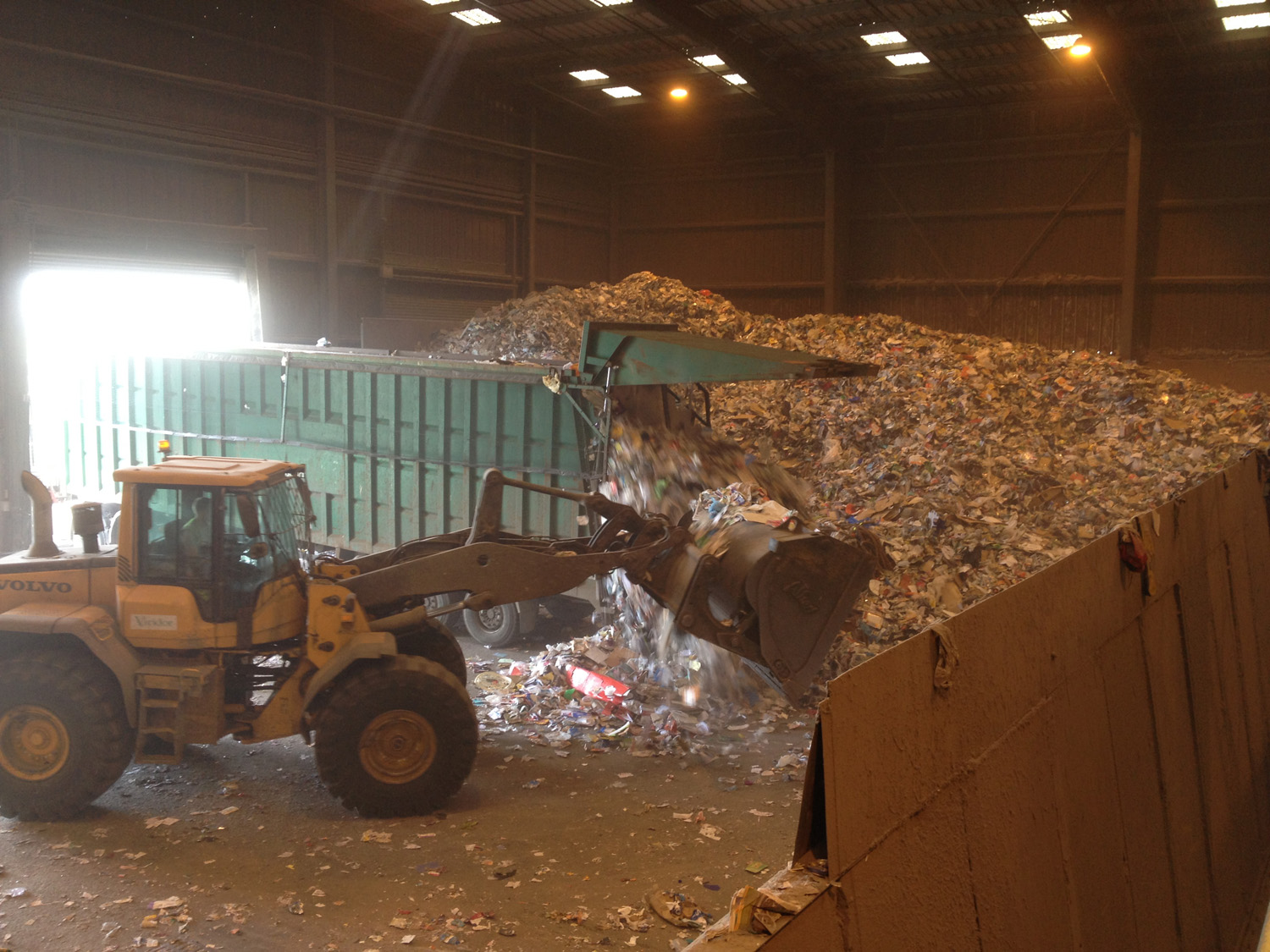
A few weeks ago, some Abbeycroft Leisure staff members visited the Viridor Masons Materials Recycling Facility (MRF), at Great Blakenham. We were all very excited about the educational visit as at heart we’re all recycling geeks and the thought of getting a look at what happens to our blue bin items when they leave our homes was really cool!
We were greeted by Carole Locke and shown into the Education Suite where Carole gave us an introductory presentation which included information on how the unique partnership between Viridor Ltd and the Suffolk Recycling Consortium was formed. The Consortium is made up of six District and Borough councils across Suffolk – Babergh, Forest Heath, Ipswich, Mid Suffolk, St Edmundsbury and Suffolk Coastal. Masons Materials Recycling Facility (MRF) receives the recyclate from the Consortium members.
During the tour itself, we saw first-hand the many different processes that take place to sort our recyclate into separate material types. These include large revolving drums called trommels, ballistic separators, a series of conveyor belts, magnets, hi-tech cameras (optical sorters) and approximately 25 line sorters. Sorting operatives are employed by Viridor to hand-pick contaminated and non-recyclable items from the belts – a way of ensuring quality control standards are met.
(A lorry arriving with blue bin material)
(Recycling material moving up a conveyer belt)
We found out how steel and aluminium are separated by magnets. Steel, being magnetic, is extracted by a runner of heavy duty magnets which attract the material and carry it off into a separate receptacle. Aluminium is repelled by two opposing magnets and ends up in its own area.
(The magnets at work)
After the tour we had the opportunity to ask questions. We discovered why shredded paper, plastic carrier bags and film are not accepted at Masons; these materials can clog the machinery at the MRF and bring the entire plant to a grinding halt!
Materials welcomed at the MRF are loose paper and card, cans and tins, aluminium foil and foil containers, plastic bottles (with the lids removed – but these can still be recycled) and hard plastic containers such as yogurt pots, ice cream tubs etc. All materials should be clean and dry – and put into the recycling bins loose.
Currently there is also a trial textile scheme. All textiles sent to Masons MUST be put into the special bags issued for this purpose, then the bags need to be placed inside the recycling bin on top of the other materials.
We learned that while most of us are still putting scrunchy plastic into our blue bins (bread packets, food wrap) it currently is unable to be recycled by Viridor. Armed with our new knowledge, we all collected free recycling sort bags from our local council household recycling centres and are storing up our scrunchy plastic for recycling there instead.
Did you know that one recycled plastic bottle can light a 60watt bulb for 6 hours!? That’s amazing! With all the knowledge we gained on our visit, we’ll be recycling enough to power our own homes!
Viridor welcomes pre-booked visits from adult groups, organisations, and schools. We would encourage anyone who wants to learn more about recycling in Suffolk to contact Carole Locke by phone 01473 836903, mobile 07778160389, email clocke@viridor.co.uk or visit the website www.suffolkrecyclingconsortium.org.uk to arrange a visit.
Tuesday, 14 May 2013
Abbeycroft Leisure checks out Havebury Housing recycling
Abbeycroft Leisure and Havebury Housing are both supporting the BBC Radio Suffolk Rubbish Diet. Cat Rayson from Abbeycroft Leisure writes about her team's visit to check out the super-organised recycling system at the housing association's main office.
On Friday our
intrepid Abbeycroft Leisure recyclers headed to Havebury Housing to
meet Michael Blackford - their green man whose expertise we planned
to utilize to our benefit for our own Slim Your Bin challenge.
Michael met us in
reception where we got our first view of their recycling efforts:
Very snazzy. We have
similar bins at Bury St Edmunds Leisure centre but with the volume of
visitors we get and the amount of small children, they’re not
always used in the correct manner. Quite often you’ll encounter a
banana peel in the cans and plastic side of the bin – which is
never a treat.
This problem is one
of many that face a business when trying to encourage recycling:
education. How do we educate people to use the bins correctly?
Michael’s answer is that people learn in time and get used to the
process... although we didn’t see many children running around
Havebury on a high from their swim session. I guess we have different
challenges in that department.
Sweeping into the
ground floor office, the first thing that struck us was the size of
the open plan environment (and the cake table we passed on our way to
the bins!). Our offices at the Leisure centre are so much smaller in
comparison – surely if Havebury can implement a recycling system on
this scale, it’ll be easy for us?
Each cluster of
desks have their own bin station. Some employees are within throwing
distance so I’m sure some competitive games of bin basketball take
place daily. Others have to walk from their desks to the bins, it
looks like exercise is being encouraged concurrently with recycling!
The bins are pretty fancy and have handy ‘toppers’ what indicate
their use: blue for recycling and black for general waste. This is a
delightful coincidence as our council bin collection separates as
such so there’s no need to associate further colours with this
work-based environmental outlook.
We moved upstairs to
IT (and pass another cake table – two cake tables!! I wonder if
they have any vacancies…?) and talk to the team about recycling
further office supplies. We notice they have a big open box full of
printer cartridges. We get through toner like its ice cream at
Abbeycroft Leisure and at present, we don’t have a recycling system
in place for our old toner cartridges.
Havebury Housing
have a super handy box supplied by ‘Each One Counts’
http://www.eachonecounts.co.uk/
a company who provide you with a recycling box to fill up. You fill
the box, you email them and they collect the box and donate money to
charity. So not only is your conscience clear from recycling, you get
the added bonus of giving money to charity – all for something that
would have previously have gone to landfill!
With our visit
drawing to a close, Michael made some last suggestions in regards to
how we can be more environmentally conscious in regards to our
attitudes to recycling in our offices.
- Change printer paper to recycled paper – it doesn’t have to be a complete swap, you can phase it in gradually.
- Create bin stations in the office with clear differences between the bins and what they hold.
- Look at having confidential waste collected for shredding/recycling.
We’ve since
ordered our own recycling boxes for Bury St Edmunds and Haverhill
Leisure Centres for our used toner cartridges and we’re on the case
of ordering our new bins and looking at more eco-friendly supplies.
Next stop – a visit to the Masons Materials Recycling Facility in
Great Blakenham to see what happens to our cardboard and plastic when
we put it in the blue bin. Hard hats ahoy!
Subscribe to:
Posts (Atom)